


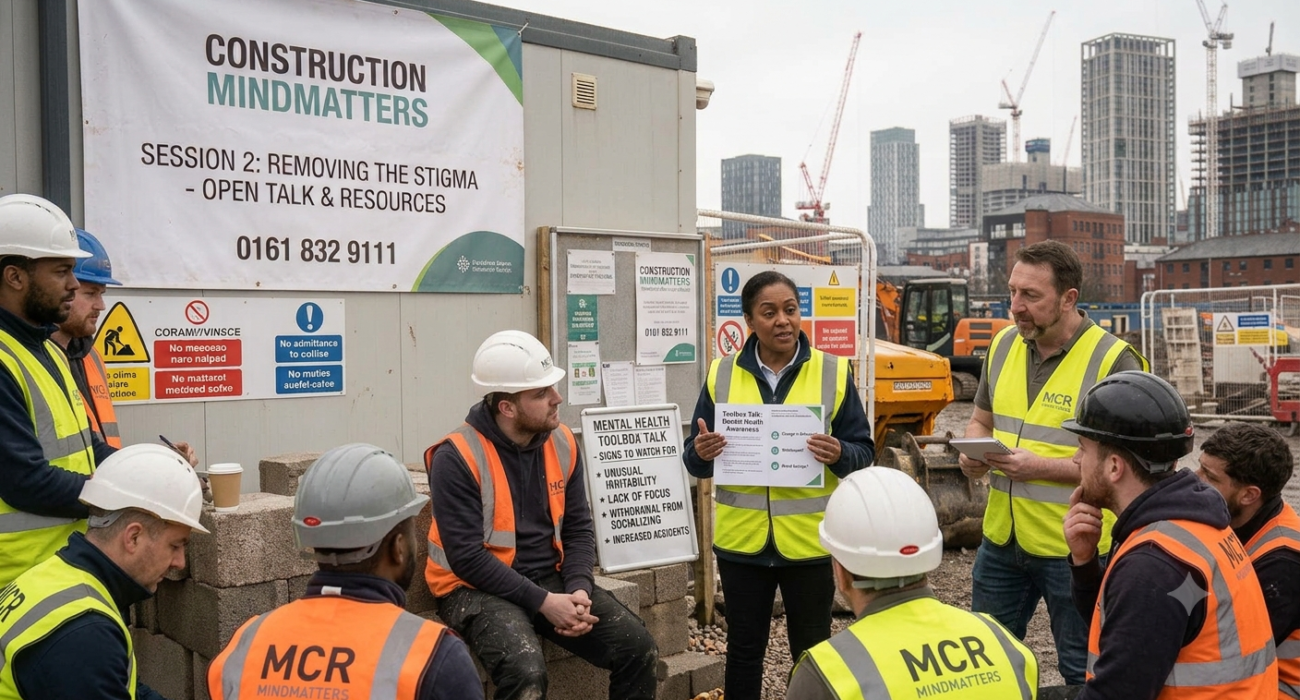
Hard Hats & Heavy Minds: Spotting the Signs and Saving a Mate on Site
We talk a lot about site safety. We wear the high-vis, we check the scaffolding, and we never step onto a site without steel-toe boots. But there is a silent hazard on our sites that kills far more tradespeople than falls from height or faulty machinery ever will.
In the UK, the suicide rate for men in construction is nearly four times the national average. That is roughly two construction workers taking their own lives every single working day.
At Construction in Mind, we believe it is time to apply the same discipline to mental health risk that we apply to physical safety. If you saw a mate working without a harness, you’d speak up. We need to start doing the same when we see someone dropping their guard mentally.
1. Spotting the Invisible Hazards: The Warning Signs
Mental distress doesn’t always look like sadness. On a busy, high-stress site, it often looks like a change in regular behavior. Keep an eye out for these shifts in your workmates:.
-
The Physical Shifts: Looking exhausted, sudden weight loss or gain, or turning up uncharacteristically messy or unwashed.
-
The Behavioral Slips: A normally sharp worker starting to make careless mistakes, arriving late, or missing days entirely.
-
The Mood Changes: Increased irritability, blowing up over minor issues, or the opposite—becoming completely quiet and withdrawing from the lunchtime banter.
-
The Coping Mechanisms: Talking about heavy drinking over the weekend, or relying more and more on energy drinks and painkillers just to get through a shift.
Signs of Acute Crisis
If a mate is in immediate danger of taking their own life, the signs often become more distinct. Pay close attention if they:
-
Make jokes or comments about “not being around anymore” or saying “what’s the point?”
-
Start giving away expensive tools or personal belongings.
-
Express intense feelings of being a burden to their family or their crew.
-
Suddenly seem strangely calm or happy after a long period of severe depression (this can sometimes mean they have made a decision).
2. How to Watch Your Mate’s Back
You don’t need to be a qualified therapist to save a life on site. You just need to be a good coworker who knows how to listen.
Use the “Ask Twice” Rule
When you ask someone “You alright?”, the default answer is almost always “Yeah, fine.” If you notice something is off, push past the first barrier.You’ve seemed a bit quiet lately, mate. Everything going alright at home?”
Listen Without Trying to ‘Fix’ It
Blokes love to jump straight into problem-solving mode. If a coworker opens up to you about financial stress, a relationship breakdown, or feeling overwhelmed, you don’t have to solve their problems. Just listen without judgment. Avoid saying things like “Cheer up” or “It could be worse.” Instead, try: “That sounds incredibly heavy, mate. I’m sorry you’re dealing with that.”
Ask the Direct Question
If you are seriously worried that someone is thinking about suicide, ask them directly. There is a common myth that putting the word “suicide” in someone’s head will make them do it. It won’t. It actually gives them a massive sense of relief that someone has noticed their pain.Are things so bad right now that you’re thinking about ending your life?”
3. Where to Direct Them for Professional Backup
If a mate admits they are struggling, or if you realize you are the one carrying a heavy mind, you do not have to carry it alone.
The Bottom Line: Looking out for your mental health—and the mental health of the crew around you—isn’t soft. It’s the ultimate form of site safety. Let’s make sure everyone who walks onto a site goes home safe at the end of the day. Inside and out.